
Success story.
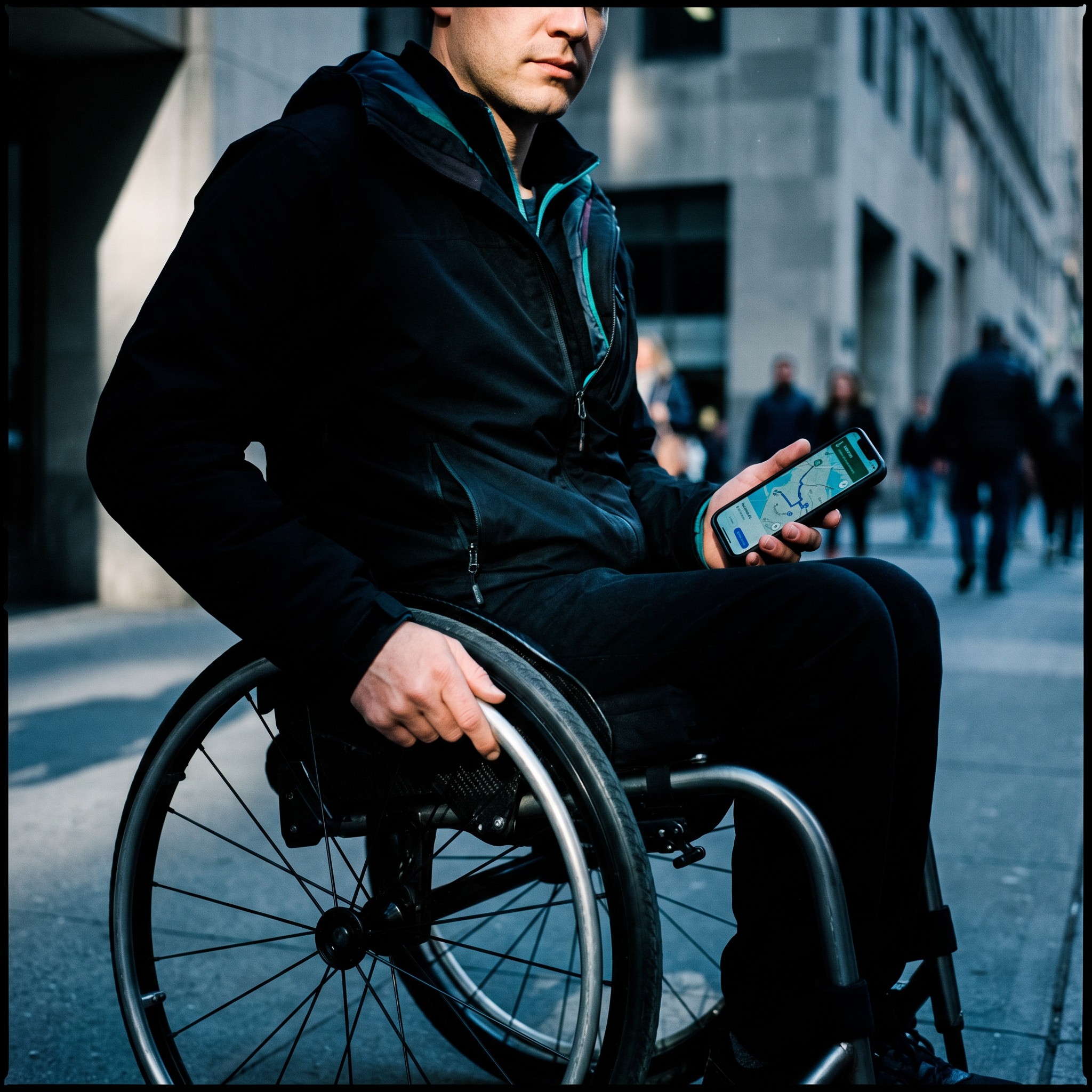
Three separate platforms, one ecosystem: accessible mobility connects apps and agents
A mobile app, an agent platform, and a landing page: three pieces that each functioned independently. Disconnection between the app and agents, faulty forms, duplicate data and screens, and a lack of process documentation increased operational risk and prevented confident scaling.
We take on any challenge
At Zenta there are no obstacles we cannot overcome.
Challenge
Connect the mobile app with the agent platform, eliminate duplicate data and screens, document the flows of the entire ecosystem for the first time, and leave a unified, traceable, and scalable functional base, with migration of maps (Google Maps → MapVX) and the landing page (from WordPress) and improvements in UX and accessibility.
Solution
We executed a comprehensive project of analysis, design, and functional documentation using Design Thinking, across four areas: Agent Platform, Administration Module, Mobile App, and Landing Page. We gathered and documented 57 functional requirements (RF-001 to RF-057) with inputs, outputs, and criteria for each module, prototyped the UX/UI in Figma with a focus on accessibility, and outlined the integration, data unification, and technology migration plans. The platforms were deployed to production: back office, landing page, and mobile app, all available on the Google Play Store.
Results from our management

57 defined and traceable functional requirements (RF-001 to RF-057), ready to be broken down into user stories.

100% of the process flows documented, starting from zero previous documentation.

0 duplicates: redundant data and screens eliminated, with the mobile app and agents already connected.

4 platforms fully covered and 2 technological migrations (maps → MapVX and landing page from WordPress), with everything deployed in production.