
Success story.
AI that detects drowsiness while driving: 80% accuracy based on real cockpit video
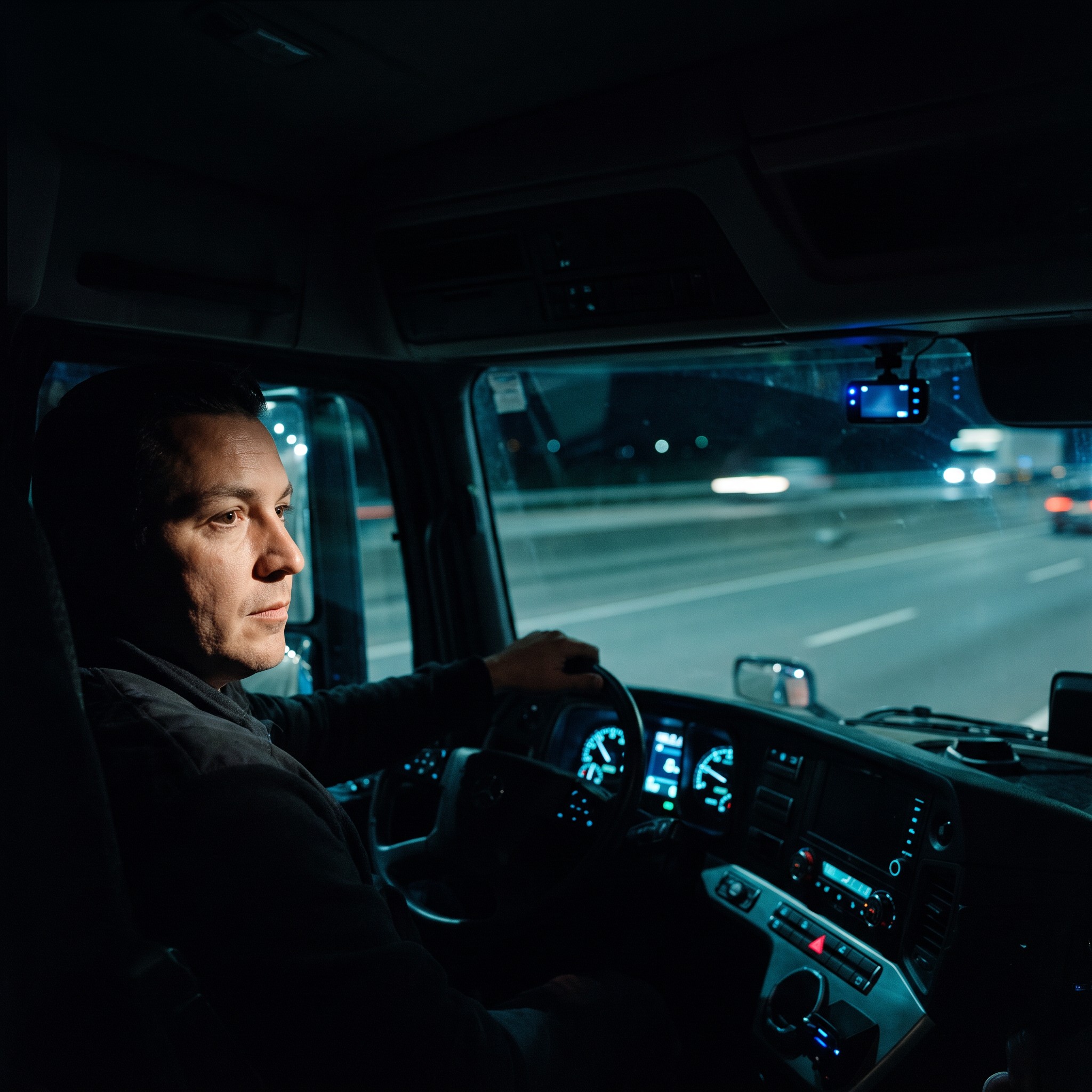
Every year, fatigue among heavy goods vehicle drivers costs lives and causes accidents. Mandatory breaks and regular inspections help, but they don't show in real time whether the driver is alert, and that risk remains.
We take on any challenge
At Zenta there are no obstacles we cannot overcome.
Challenge
To verify, technically and economically, whether a Visual-Language Generative AI model could accurately detect signs of fatigue (eye closure, yawning, head movement) on real video, keeping the cost of GPU inference under control and with an architecture that incorporated new models without re-engineering.
Solution
We designed and validated a video analytics API using Visual-Language Generative AI, 100% on Google Cloud. The event-driven, serverless architecture (Cloud Run, Pub/Sub, Firestore) uses two models: Gemini 2.5 Flash for rapid pre-assessment that discards invalid videos, and Qwen3-VL on an A100 GPU for in-depth analysis. The pipeline is idempotent and traceable, with adjustable inference parameters to balance accuracy and cost, and publishes the results via Pub/Sub for integration with the fleet's telematics system (in-cab alarms and notification to the control center).
Results from our management

Predictive accuracy of 80% or more, meeting the success criteria agreed in the SOW.

Cost per analysis from USD 0.14 to 0.50 depending on volume, within the defined viability range.

End-to-end pipeline of ~41 seconds, with only 2.23% non-productive overhead (97% is AI analysis).
Validated modular architecture: 3 tested VL models without re-engineering, with 100% traceability per request in Firestore.